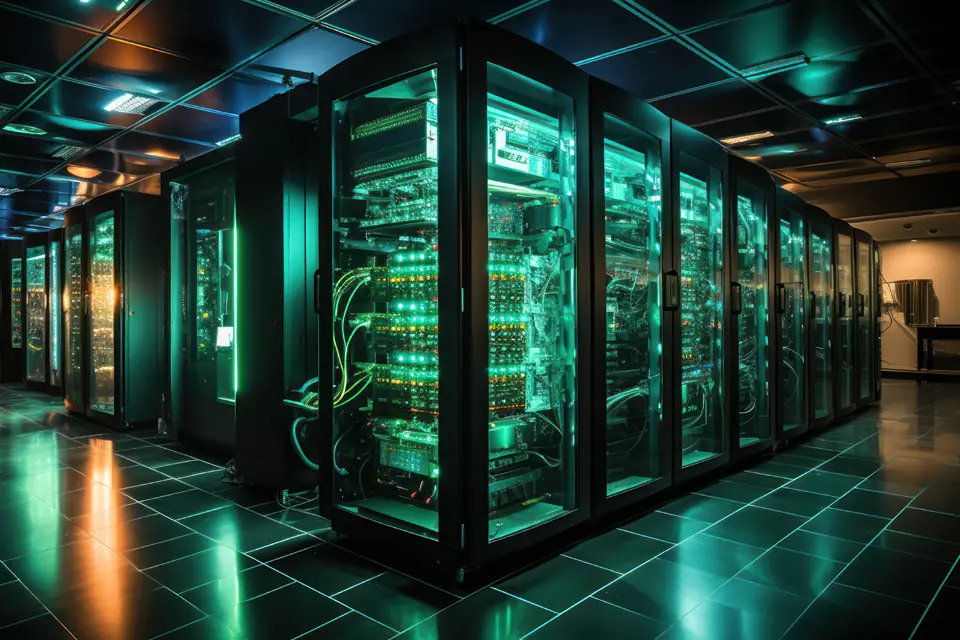
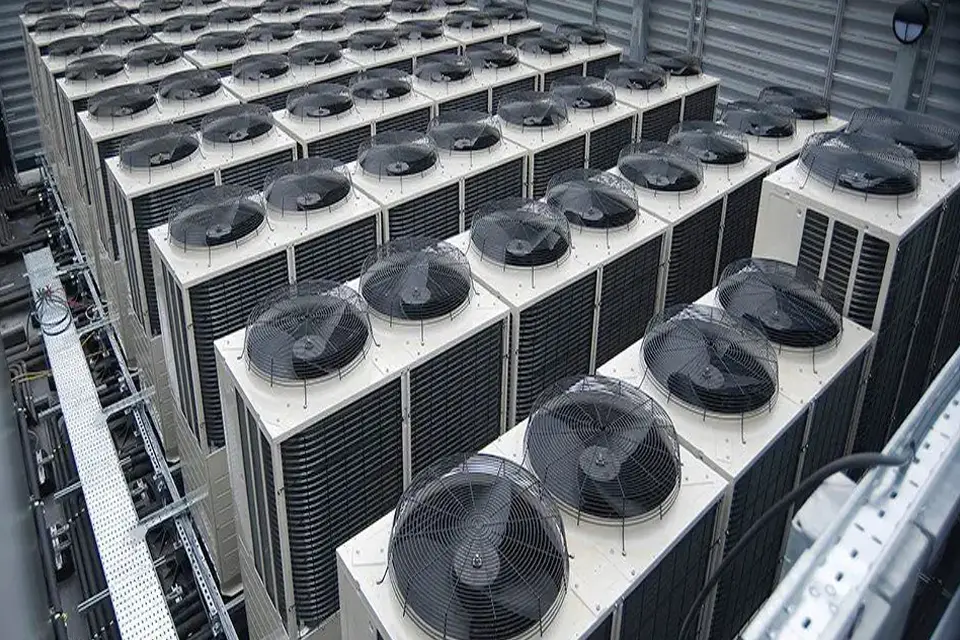
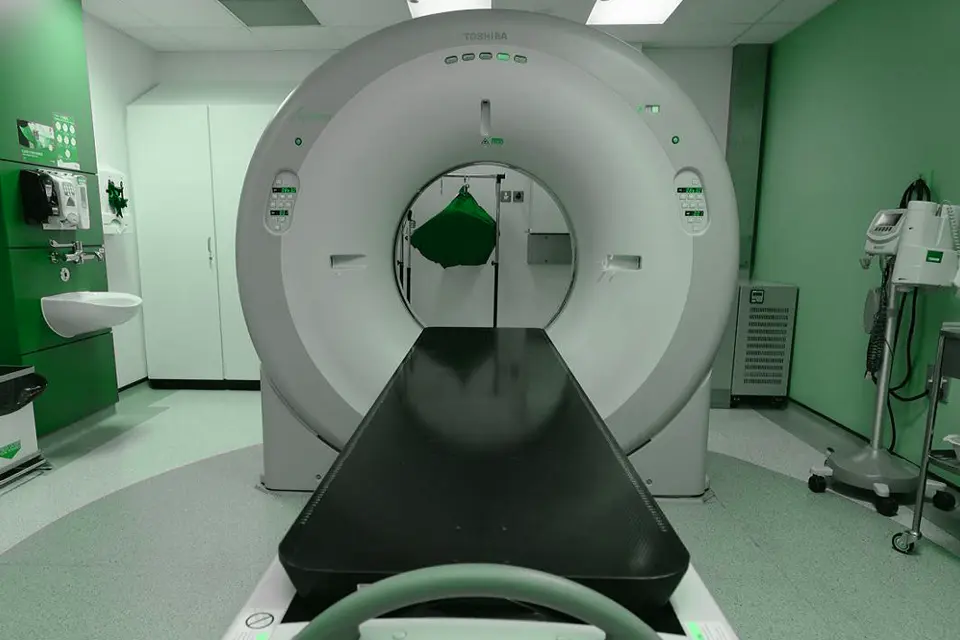
Data center cooling systems are used to control the high heat in large data centers and maintain the operating environment of servers and other equipment at appropriate temperature and humidity levels. These systems are designed to address the heating issues caused by high-density equipment in data centers. Here are some commonly used data center cooling systems:
1- Air Cooled Systems:; In these systems, cold air taken from outside is directed directly into the data center and cools the equipment inside. This method is commonly used for low-density data centers.
2- Liquid Cooled Systems: In liquid cooling systems, water or another coolant liquid is applied directly to the heat-producing components of data center equipment. These liquids remove heat from the equipment, performing the cooling process. Liquid cooling systems are preferred for dense and high-performance data centers.
3- Vapor Compression Cooling Systems: Vapor compression cooling systems cool the data center by compressing and expanding a coolant fluid to remove heat. These systems are typically used for large data centers.
4- Direct Expansion Cooling Systems: In these systems, outside air or a coolant fluid is used to cool the equipment inside the data center. These systems provide energy efficiency and emit less heat into the environment.
5- Climate Control and Precision Airflow: Data center cooling systems typically provide climate control and precision airflow to maintain the equipment's operating environment at stable temperature and humidity levels. This increases equipment reliability and optimizes performance.
Data center cooling systems help increase data center efficiency by improving equipment performance and reducing energy costs. Therefore, choosing the right cooling system is important for large-scale data centers. Thrace Chiller offers customized energy-saving solutions for data center cooling systems.
A data centre chiller is selected together with the IT load profile and facility heat rejection design. Facility water, a CDU/intermediate heat exchanger and equipment cooling water must not be assumed to be one circuit. Allowable temperature and water quality depend on the equipment manufacturer’s requirements.
Pre-quotation checklist
Current and planned IT heat load and growth stages
Equipment limits for temperature, flow and water quality
CDU/heat exchanger approach and circuit boundaries
Redundancy target, operation during maintenance and alarm integration
Frequently asked questions
Does compressor redundancy make the entire facility redundant?
No. Pumps, electrical supply, controls and heat rejection also require assessment. Verify redundancy at system level.
Does chiller COP determine PUE?
No. COP describes efficiency at a defined equipment boundary; PUE relates total facility energy to IT energy. A chiller datasheet cannot establish facility PUE.